Industrial Info Resources, a Global Navigator for Energy & Industrial Markets
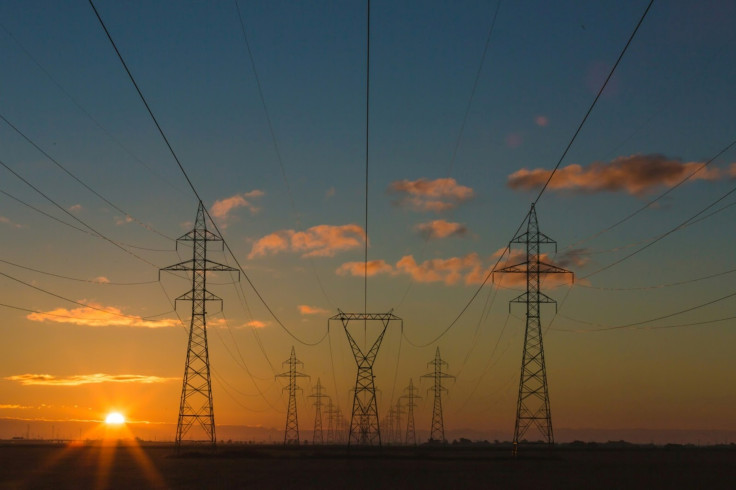
Global electricity demand is rising fast enough to expose every weak link in energy infrastructure planning. The International Energy Agency forecasts world electricity use will grow 3.3% in 2025 and 3.7% in 2026, a pace that forces utilities, governments, and industrial operators to make capital decisions with less margin for error. Data centers add to this urgency. The IEA estimates data centers consumed about 460 terawatt-hours in 2022 and warns their electricity use could reach more than 1,000 terawatt-hours by 2026.
In that scenario, the challenge many executives face is not whether demand exists. It is whether the projects that are supposed to meet it will actually arrive, on time, on budget, and connected to a grid that can carry the actual load. Industrial Info Resources, or IIR, carved out its niche by tackling that very challenge—approaching energy and industrial sectors as a dynamic stream of physical assets, regulatory filings, purchasing stages, and project updates.
A Global Network Built for Local Signals: The Origins and Evolution of IIR
Industrial Info Resources was founded in 1983 by Ed Lewis, who built an early team by recruiting senior process engineers and plant managers leaving the industry during the early 1980s recession. The core idea was if you can verify what is being built at the facility level, you can remove a layer of guesswork that distorts spending forecasts and market timing.
IIR's reputation was forged through rigorous firsthand verification and a geographic reach that scaled alongside the globalization of industrial supply chains. With research and sales hubs in 17 global locations and operations spanning over 59 languages, IIR recognizes that industrial reality remains a local affair despite global capital. This perspective is vital because the actual progress of a project is dictated by regional variables—from fluctuating permitting timelines and local labor availability to early warning signs of procurement risk, such as contractor staffing levels or delayed equipment delivery.
"Our goal from the beginning has been to provide decision-makers with verified, project-level data they can trust, not just forecasts or trend lines. When executives can see what's actually being built, delayed, or canceled, they make better, less reactive decisions," says Lewis.
That philosophy pushed IIR beyond a static directory of projects and toward a continuously updated intelligence system built to support investment planning, market entry decisions, and risk management.
How IIR Builds Project-Level Intelligence
IIR's model leans on direct collection and repeated validation, then organizes that information around the lifecycle of a project. The company says its team includes more than 500 researchers who gather and validate project information directly from asset owners, contractors, and local sources across five continents. It also highlights the language capability that supports on-the-ground verification and reduces dependency on secondhand narratives.
Industrial Info's project intelligence platform is a global database of active and planned energy and industrial projects that is updated as timelines, scopes, and execution conditions change. Instead of using project announcements as endpoints, the system views each project as a stream of status signals. IIR says its researchers track daily changes across projects worldwide and continuously verify updates with primary sources. The data model is organized around milestone movement across the capital cycle, including AFE or FID, RFQs, equipment and subcontractor bidding, construction kickoff, and completion.
That is a different unit of measurement than most market outlooks. A long-range forecast can project capacity additions. Project-level tracking can show whether those additions are still plausible when engineering slips, financing tightens, transformers face multi-year lead times, or an EPC changes hands.
Lewis ties that approach to a broader view of data quality in a period when AI makes information plentiful but unreliable. He says, "In today's AI-driven world, data is everywhere, but not all data is created equal. At Industrial Info Resources, we've built a 40-year reputation on one core principle: data is only valuable when it's accurate, validated, and actionable."
Where Industrial Capacity Is Actually Taking Shape
Power demand growth and grid constraints
In Great Britain, the regulator Ofgem said proposed data center projects could require as much as 50 gigawatts of electricity, above the country's current peak demand of about 46 gigawatts. Whether all proposals proceed is uncertain, but the applications themselves illustrate how quickly load expectations can outrun interconnection reality.
Project-level data serves as the filter that separates "paper intent" from actual execution. While a hyperscale campus announcement indicates market interest, it is the more granular milestones—such as substation upgrades, transformer procurement, and transmission reinforcement—that confirm a project's feasibility. This distinction has become critical as electrification spreads from data centers to manufacturing and transportation, sectors that the IEA identifies as primary demand drivers through 2026.
LNG and gas infrastructure readiness
LNG is a case study in why "demand" headlines do not translate directly into near-term supply. Qatar's North Field Expansion is one of the world's largest capacity additions. QatarEnergy describes the program as raising LNG production capacity from 77 million tons per annum to 126 million tons per annum by 2027. Reporting on the project's schedule indicates first LNG from the expansion is expected in the second half of 2026, with executives noting that large projects can move by months.
Elsewhere, timelines are shaped by security and execution risk. TotalEnergies announced a "full restart" of Mozambique LNG in January 2026 after a multi-year suspension, with public reporting placing first gas deliveries around 2029. In North America, LNG Canada's own project updates note its ramp-up, including a milestone of 50 cargoes delivered as of February 2026 and the entry of Train 2 into production in 2025.
For investors and policymakers tracking gas as both a transition and security fuel, those differences speak volumes more than aggregate forecasts. Project-level tracking can show which terminals have credible commissioning windows, which pipeline links are lagging, and where schedule drift is becoming structural.
Industrial manufacturing and reshoring
Industrial manufacturing buildouts are diverging sharply between what gets announced and what actually moves into construction.
Intel shifted the expected start of production for its Ohio fabs into the early 2030s, tying the schedule to market demand and capital sequencing. In India, the signal looks different because it is attached to a defined site, a defined scope, and a published scale. Tata Electronics has outlined a semiconductor fab at Dholera with investment up to INR 91,000 crore and planned capacity up to 50,000 wafers per month. For strategy teams, that means a project that advances through land control, permits, an EPC award, long-lead tool procurement, and dated utility upgrades carries a different risk profile than one that remains a press-release plan. Project-level tracking surfaces those differences early.
How Decision-Makers Use Project Signals
Utilities, investors, and industrial developers use project intelligence for the same reason. They need to know what is likely to come online and when, before they commit capital.
For utilities, the immediate priority is reliability. If multiple large loads are aiming for the same substation or transmission corridor, planners must separate requests from projects with dated interconnection milestones and funded upgrade work. That determines where to reinforce the grid and where to slow or sequence new connections.
For capital markets teams, they look more at timing risk. When FIDs slip, EPC scopes change, or long-lead equipment stretches schedules, the cash-flow profile of an energy or infrastructure theme changes with it. Verified delay and rescoping signals can show up months before a quarterly forecast catches up.
For industrial developers, execution timing becomes a siting constraint. Power availability, permitting timelines, and labor capacity decide whether a facility can actually open on schedule. Early visibility into schedule slippage and procurement bottlenecks can shift where a company chooses to build.
Where the Build Meets the Market
Market capacity over the next several years will hinge on which projects actually move from plans to buildable work. For power, the tell is whether large loads and new generation clear the steps that unlock construction, including an approved grid connection, a dated upgrade plan, and secured delivery for critical equipment. Those are the differences between a data center corridor that energizes on schedule and one that slips a year.
This is where IIR's methodology becomes useful in a more complex market. By verifying project status and tracking milestone movement across regions, IIR surfaces execution risk early, before it shows up in aggregate forecasts. Utilities can then prioritize reinforcement where timing is tightening, and investors can reprice schedule risk, while developers can choose sites where permits, labor, and power upgrades have a credible path to completion.
© Copyright 2023 IBTimes AE. All rights reserved.
- MOST POPULAR IN World